
How to Choose Fabric When You're Learning to Sew
Updated: Aug 29
Simple, practical advice for choosing fabric for your first sewing projects.

Choosing fabric can be a little overwhelming when you're learning to sew. With so many options available, knowing what to use and what to avoid can feel like a lot, especially when you're standing in a fabric shop surrounded by hundreds of rolls. Suddenly the project you were looking forward to making feels much bigger and more complex than it did at first.
A beginner-friendly fabric makes sewing a lot easier, and picking the right one is one of the simplest ways to set yourself up for a good result. Slippery, stretchy, or bulky fabrics are genuinely harder to sew, so starting with something easy to handle takes away a lot of the difficulty before you even begin.
This guide walks you through how to choose fabric when you're learning to sew, so your project turns out the way you hoped.

Start with quilting cotton
If you remember one thing from this whole post, let it be this...
Quilting cotton is one of the easiest fabrics to learn on, and it's what I'd recommend to most beginners. Other basic woven cottons work well too, but quilting cotton is easy to find and a lovely place to start.
It holds its shape, so it doesn't shift and stretch while you sew.
It presses beautifully, which makes your seams look crisp and neat.
It doesn't fray too badly, and it's forgiving if you need to unpick a seam and try again.
It also comes in every colour and print you could want, usually at a reasonable price.
Quilting cotton is sold in most fabric shops and is easy to find online. Look for medium-weight cotton labelled for quilting or patchwork, and you're in the right place. Most larger stores have a whole section dedicated to it.

Fabrics to leave for later
None of these fabrics are off limits forever. They are simply harder to handle, so they make first projects more stressful than they need to be. Here are the main ones to skip at the start.
Slippery fabrics like satin and silky linings slide around, can be harder to sew and cut accurately, and fray easily.
Stretchy knit fabrics, the kind used for t-shirts, need a little more know-how to stop the seams stretching out of shape.
Thick or bulky fabrics like denim, canvas, and heavy upholstery fabric are hard for a beginner machine to sew through smoothly.
Very fine or sheer fabrics are delicate and fiddly, and they show every little mistake.
Think of these as fabrics to grow into, not fabrics to avoid. Once you have a few projects behind you, they feel much less daunting.

Match the fabric to the project
Different projects suit different fabrics, and choosing the right one gives you a better result and a more enjoyable sewing experience.
For most beginner bags and pouches, a good quilting cotton is all you need. It's easy to sew and is firm and structured enough to hold its shape, which is exactly what these projects want.
Quilted items, like a Kindle or laptop sleeve, or a quilted tote, use that same cotton on the outside with a layer of padding in between to create the soft, puffy texture.
Softer items, like a doll blanket or anything you want to feel gentle and drapey, suit a lighter cotton or a flannel instead. But for your first few projects, a standard quilting cotton covers almost everything beautifully.
Making clothes is a different skill. Garment fabrics are chosen for how they drape and move, but for most beginner projects, and all of my patterns, a simple cotton is exactly what you want.
What about interfacings?
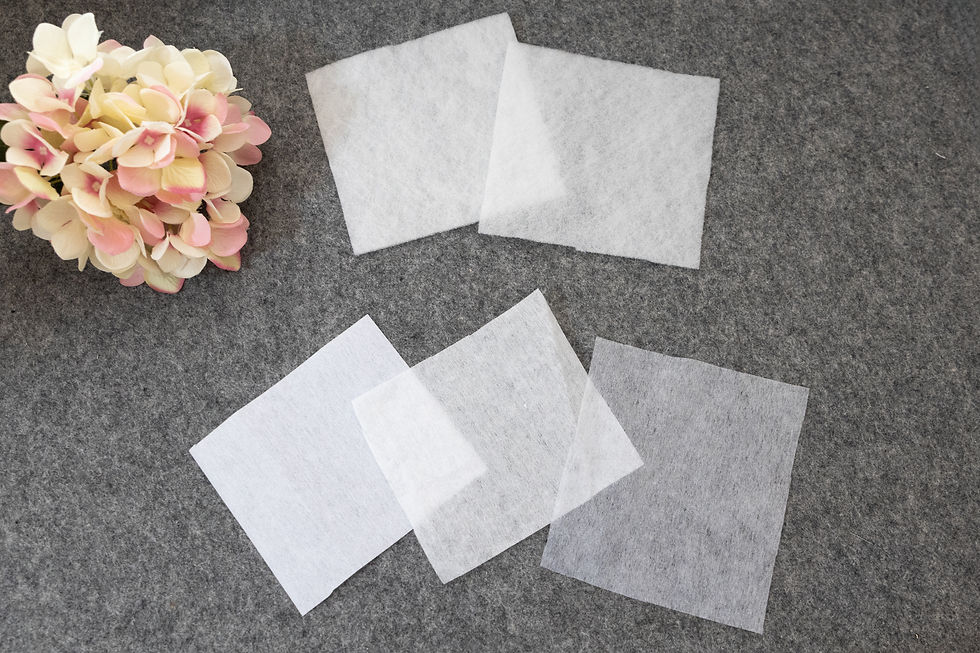
Once you start reading patterns, you may also come across interfacing, fusible fleece, foam, wadding or batting. These are all materials that you attach to your fabric to add body and structure, and they are what helps a pouch or bag hold its shape rather than flop.
All of my patterns tell you exactly which type to use and when, so there's no need to know anything up front. But, it's a topic worth knowing about, and I will be sharing a whole blog post about interfacings soon.

Choose a print you will love
Half the joy of sewing is making something in fabric you actually love, so choose a print that makes you happy.
A couple of small things help it turn out well.
Watch the scale of the print. A large print can get lost or awkwardly cut off on a small item like a pouch, where you only see one little section of the design. Smaller prints and all-over patterns tend to work better on small projects.
Keep an eye out for directional prints too. If a print has a clear up and down, like rows of little houses or writing, you need to make sure it sits the right way up on your finished piece. It doesn’t mean that fabric has to be avoided, it’s just something to be aware of before you cut.
Apart from that, follow your eye. Making something in a fabric you genuinely love is one of the best parts of sewing, and it is a feeling you cannot buy off a shelf.

A few practical buying tips
A little planning can save frustration later.
Buy a bit more than the pattern calls for, especially at first. Every pattern will tell you exactly how much fabric you need, so there's no guesswork, but an extra 10 to 20 centimetres (about 4 to 8 inches) gives you a bit of extra wriggle room, and it doesn't add much to the cost for peace of mind. There are plenty of little projects you can make with scraps and offcuts later on.
Prewashing your fabric is totally up to you. Some people always do and others don't. For me, it depends on the project and fabric. If I'm using a dark coloured fabric where the dye may run, then yes, I will prewash. Most of the projects I make are from light coloured fabrics and are not likely to be washed in the future, but if it's something that will be washed regularly, then that is another reason for prewashing. Cotton can shrink slightly the first time it is washed, so prewashing means your project keeps its shape and size. Wash and dry it the way you plan to wash the finished item, then always press it before cutting.
Don't be shy about asking staff in a fabric shop for help. They handle fabrics all day and are usually happy to point you toward a good beginner-friendly cotton, or the right one for your project.

You will get the hang of it quickly
Choosing fabric feels like a big decision when you're starting out, but it becomes easier and faster with a little experience. After a few projects, you will pick up a fabric, feel its weight and texture, and just know whether it suits what you have in mind.
For now, keep it simple. A pretty quilting cotton in a print that you love is a great place to start, and it sets you up to finish something you are proud of.
Not sure what to make yet?
Have a browse through my patterns and pick something you'd love to sew. The instructions for each one tells you exactly how much fabric to buy and what type works best, so you can choose your project first and shop later for fabric with confidence.
Browse the patterns → www.vickiellehandmade.etsy.com
Or if you'd like a free project to start with, you can download my free glasses case pattern here. It's a lovely little pattern to practise on, and it comes with all the information you need to get going.
Get the free pattern → https://www.vickielle.com.au/free-glasses-case-sewing-pattern
Happy sewing, and as always, if you have any questions, please don't hesitate to get in touch vicki@vickielle.com.au.


Comments